Carbon Real Ecosystem

Technological, methodological and financial solutions for all actors in the carbon market.

TECHNOLOGICAL SOLUTIONSFINANCIAL SOLUTIONSMETHODOLOGICAL SOLUTIONSCARBONREAL®Carbon ProjectDevelopersEcosystem MonitoringOrganizationsNGOs andGovernmentsCompanies withNet Zero GoalsPrivate & PublicLandownersLocalCommunities

Technology, methodology and financing for the carbon market

Carbon Real integrates three solution lines to transform natural ecosystems into measurable, certifiable and financially sustainable assets, for both offsetting and insetting.

01

Technological Solution

Digital monitoring, verification and traceability system for the carbon market.

  • Real-time dMRV

    Digital monitoring, reporting and verification to measure the climate performance of ecosystems with greater traceability and precision.

  • Interactive environmental visualization

    Platform to visualize, analyze and communicate field-measured data on carbon projects, biodiversity and ecosystem services.

  • Ecosystem monitoring

    Services for companies, NGOs and governments focused on land management, ESG, carbon project development and natural capital valuation.

  • Blockchain for traceability

    Blockchain technology to strengthen the transparency and integrity of the data supporting credit certification and trading.

02

Methodological Solution

Proprietary scientific methodologies to measure, certify and value natural capital and ecosystem services.

  • Methodologies for natural capital

    We design methodologies applicable to the carbon, biodiversity and other ecosystem services markets, with a focus on measurement and certification.

  • M-ICR013 Methodology

    World's first methodology for creating AFOLU carbon credit projects based on real-time GHG monitoring.

  • dMRV project advisory and design

    We structure projects under proprietary or external methodologies requiring dMRV for credit generation, offsetting, insetting or natural capital valuation.

03

Financial Solution

Investment, financing and profitable models to make environmental projects economically sustainable.

  • Investment in carbon projects

    We invest, structure and finance carbon and ecosystem services projects, lowering barriers to entry and accelerating certification and issuance.

  • Land and natural capital management

    We work with owners, communities, and institutions to convert ecosystems into assets that generate income through carbon credits, biodiversity, and the transaction of other ecosystem services.

  • Profitable models for sustainability

    We create scalable structures so that environmental projects sustain themselves over time through certification, valuation and commercialization of ecosystem services.

  • Insetting and ESG as a profitable unit

    We transform sustainability management and ESG areas into units that value their own natural assets, integrate ecosystem services into the climate strategy, and generate financially measurable value.

M-ICR013 World's First

World's First Methodology to Quantify Net Carbon Gains in Real Time

ICR013 Methodology

Breaking Paradigms

While traditional methodologies project carbon from historical data, Carbon Real measures it in real time. No estimates, no extrapolations — only verifiable ecosystem data.

Methodological comparison

Why we changed the standard

01

Analog measurement vs Real-time measurement

Traditional

Periodic analog measurement

± high uncertainty051015
  • Field inventories every 5–10 years
  • High uncertainty between sampling events
  • Cannot detect interannual climate events
VS
Carbon Real

Continuous real-time measurement

± low uncertaintyNEE every 30 min
  • NEE measured 10 times per second and grouped every 30 minutes, 24/7
  • Low uncertainty with high-density data
  • Detects climate variability and seasonal impacts
02

Static baseline vs Dynamic in-situ baseline

Traditional

Static baseline (historical projection)

fixed BAUstatic projection051015
  • BAU calculated from fixed historical data
  • Does not respond to real ecosystem changes
  • Susceptible to carbon over-crediting
VS
Carbon Real

Dynamic in-situ baseline (GBM→LBM→LBM+)

ΔNEEControlGBM→LBM051015
  • Control area measured simultaneously with field EC
  • Model automatically updates the baseline
  • Credits verified against a real reference area
03

Static inventory vs Eddy Covariance

Traditional

Decadal carbon inventory (AGB+BGB+SOC)

AGBABOVE-GROUNDBIOMASSBGBBELOW-GROUNDBIOMASSSOCSOIL ORGANICCARBONdecadal inventorytC/ha
  • Carbon pool estimates measured separately
  • Does not capture net ecosystem carbon fluxes
  • Large temporal gaps with no continuous data
VS
Carbon Real

Eddy Covariance — direct NEE

ΔNEEtCO₂/haEC · NEE every 30 min
  • Measures the true net ecosystem exchange (NEE)
  • Sub-hourly resolution: measured 10 times per second and grouped with one data point every 30 minutes
  • Integrates all fluxes into one verifiable number

A truly dynamic real-time baseline

The first global methodology that quantifies net ecosystem exchange by comparing in real time the Project trajectory versus the Control (BAU), capturing actual climatic, ecological and management variability instead of fixed projections.

  • Control and treatment measured with real annual fluxes
  • Applicable to any ecosystem in the world

"The project is rewarded for what actually happens, not for what was projected at validation."

ProjectControl (BAU)± Uncertainty
ΔNEE créditos ↑± incerteza02550751005101520YEARS FROM START →tCO₂ ha⁻¹
M-ICR013 · Continuous measurement
M-ICR013 · Eligible Activities

Measurable intervention in two ecosystem types

The methodology compares two real trajectories: with and without the project. The resulting ΔNEE are the verified credits.

Natural Ecosystems
Without Project (BAU)
Degraded or abandoned
CO₂ ~
Reduced or stagnant sequestration
ΔNEE
With Project
Degraded or abandoned
Restoration and conservation
CO₂ ↓
Greater carbon sequestration
Agriculture and Soils
Without Project (BAU)
Unsustainable agriculture
CO₂ ↑N₂O ↑CH₄ ↑
Continuous GHG emissions
ΔNEE
With Project
Unsustainable agriculture
Sustainable agriculture + soil restoration
CO₂ ↓N₂O ↓CH₄ –
GHG reduction + greater sequestration
Continuous real-time measurement · Annual ex-post verification · Applicable to any ecosystem in the world
Scientific Backing

Our Methodology

Internationally certified and validated under the International Carbon Registry standards

The M-ICR013 methodology is the scientific protocol backing every carbon credit issued by Carbon Real. Developed under the International Carbon Registry (ICR) standards, it establishes the measurement, reporting and verification criteria for Eddy Covariance-based emission reduction projects.

Review it here

QR Metodología M-ICR013
Scan

Strategic Alliance with Japón

We have a strategic alliance with NTT Data, a Japanese global technology leader. They have actively supported the conceptualization of our methodology and will provide key data for the continuous monitoring of our projects.

NTT Data's own satellites — will provide high-precision Earth observation data for the continuous ecosystem monitoring of our projects.


Marble Visions
NTT Data
Real-time CO₂ MonitorLive
−8.3 tCO₂e
232,081
Protected trees
8,764
Hectares protected
297,685
Carbon stock (tons)

Carbon credits with scientific backing

Carbon Real offers owners of natural ecosystems—forests, jungles, wetlands, peatlands, grasslands, scrublands, mangroves, and other ecologically valuable areas—the opportunity to monetize the ecosystem service of removing CO₂ from the atmosphere that occurs naturally on their land. Although this process is free for nature, its continuity is not guaranteed: it can be threatened or reduced by human pressures, natural hazards, degradation, fires, changes in land use, or a lack of monitoring and active conservation.

We are pioneers in developing projects that generate high-integrity carbon credits, based on real measurements, traceable information, and verifiable data, with the aim of promoting nature conservation and regeneration, and creating sustainable economic benefits for landowners, local communities, and territories.

Field verification
99.4%
Sensor uptime
Digital data

Our figures

Projects
0
Projects
Stations
0
Stations
Protected Lands
0
Protected Lands
Protected Trees
0
Protected Trees
Protected Hectares
0
Protected Hectares
Carbon Stock (tons)
0
Carbon Stock (tons)
Live MonitoringMeasurements recorded since you entered this page
0
measurements

What makes us different

The higher the quality, the greater the impact.

Technology

We are at the forefront of technology in the measurement of environmental variables, applying the most suitable and the most detailed and accurate technology in each phase of our process:

Flow measurement

Flow measurement

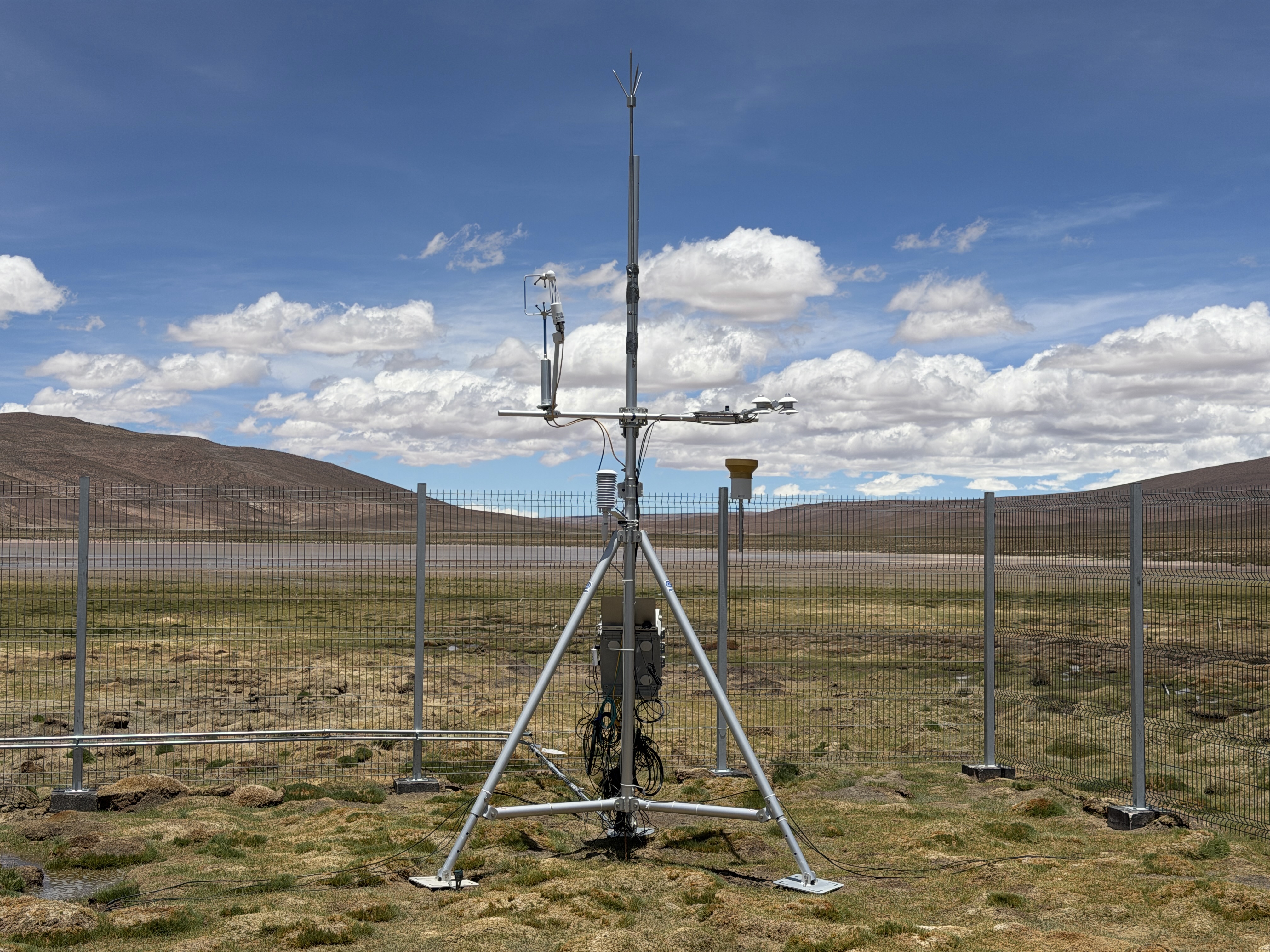
To measure the net exchange between the biosphere and the atmosphere, we use a measurement system capable of recording the variation of CO2 over time. When the net ecosystemic exchange reaches 1 ton of CO2 removed, a tradable carbon credit is generated online. This process is 100% autonomous, without human intervention, which guarantees its transparency and inviolability.

Active remote sensing

Active remote sensing

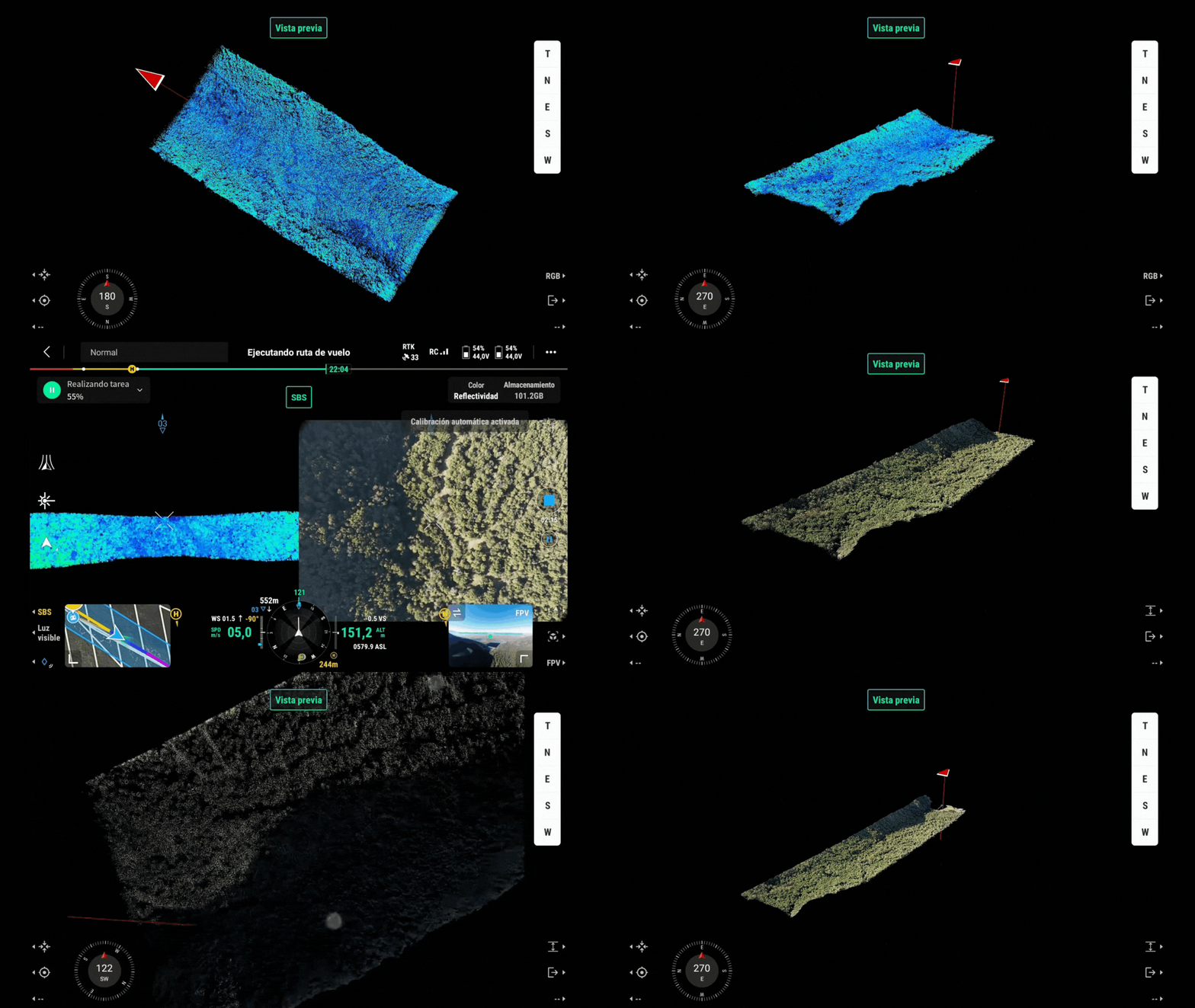
We have advanced scanning technology that uses pulses of light to generate detailed and accurate maps of the natural environment, allowing us to quantify biomass to centimeter accuracy.

Passive remote sensing

Passive remote sensing

We use open-source and private satellite monitoring systems to identify anthropogenic and natural disturbances at different temporal and spatial scales.

Tokenization

Tokenization

We work with blockchain technology, an encryption system that allows users to audit the information of our projects at any time, allowing the process of traceability of information, both scientific, administrative and legal.

Biodiversity
Biodiversity

At Carbon Real, we understand that conserving existing ecosystems—forests, jungles, wetlands, peatlands, grasslands, scrublands, mangroves, and other areas of high ecological value—not only safeguards their natural capacity to remove CO₂ from the atmosphere but also protects the life that sustains them. Through fieldwork, technical analysis, and continuous monitoring, we gather ecological metrics on the various components of biodiversity—flora, fauna, fungi, and other organisms—to quantitatively integrate this variable into our quality standards. In this way, biodiversity ceases to be merely a narrative attribute of the project and becomes an integral part of its measurable, verifiable, and traceable environmental performance.

Linkage with local communities

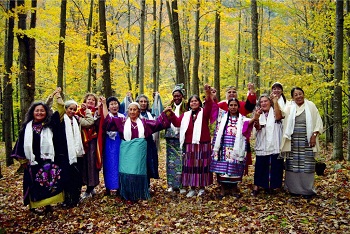
We consider local communities as true partners in our projects, involving them both in decision-making and making them true participants in the prosperity generated by the projects with governance and economic and community development plans that allow for the long-term permanence and conservation of the projects

M-ICR013 methodology certified by the European ICR standard

For Carbon Real, the term "quality" is not limited to carbon measurement, but includes three other fundamental factors: technology, biodiversity and links with local communities.

Independent Validation

German Validator TÜV Rheinland (VVB)

German body TÜV Rheinland acts as the Validation and Verification Body (VVB) for our M-ICR013 methodology, and also validates our Project Description Document (PDD).

M-ICR013PDDVVB

Our Monitoring Stations

What we measure to provide accurate and reliable data

Eddy Covariance Station
Monitoring stations
CO₂ Flux
-2.1
μmol m⁻² s⁻¹
PAR Radiation
1240
μmol m⁻² s⁻¹
Wind Speed
4.2
m s⁻¹
Net Radiation
380
W m⁻²
Air Temperature
9.4
°C
Precipitation
1.2
mm
Soil Heat Flux
18.5
W m⁻²
Soil Water
2.14
m³ m⁻³
CO₂ Flux
-2.1μmol m⁻² s⁻¹
PAR Radiation
1240μmol m⁻² s⁻¹
Wind Speed
4.2m s⁻¹
Net Radiation
380W m⁻²
Air Temperature
9.4°C
Precipitation
0mm
Soil Heat Flux
18.5W m⁻²
Soil Water
2.14m³ m⁻³